- Corporate Events
- Guest Experience
- Live Calligraphy
Personalization works best when it is designed as part of the full guest experience. A hand-lettered name, engraved bottle, or foiled tag becomes more meaningful when the surrounding moment feels intentional.
Think beyond the finished item
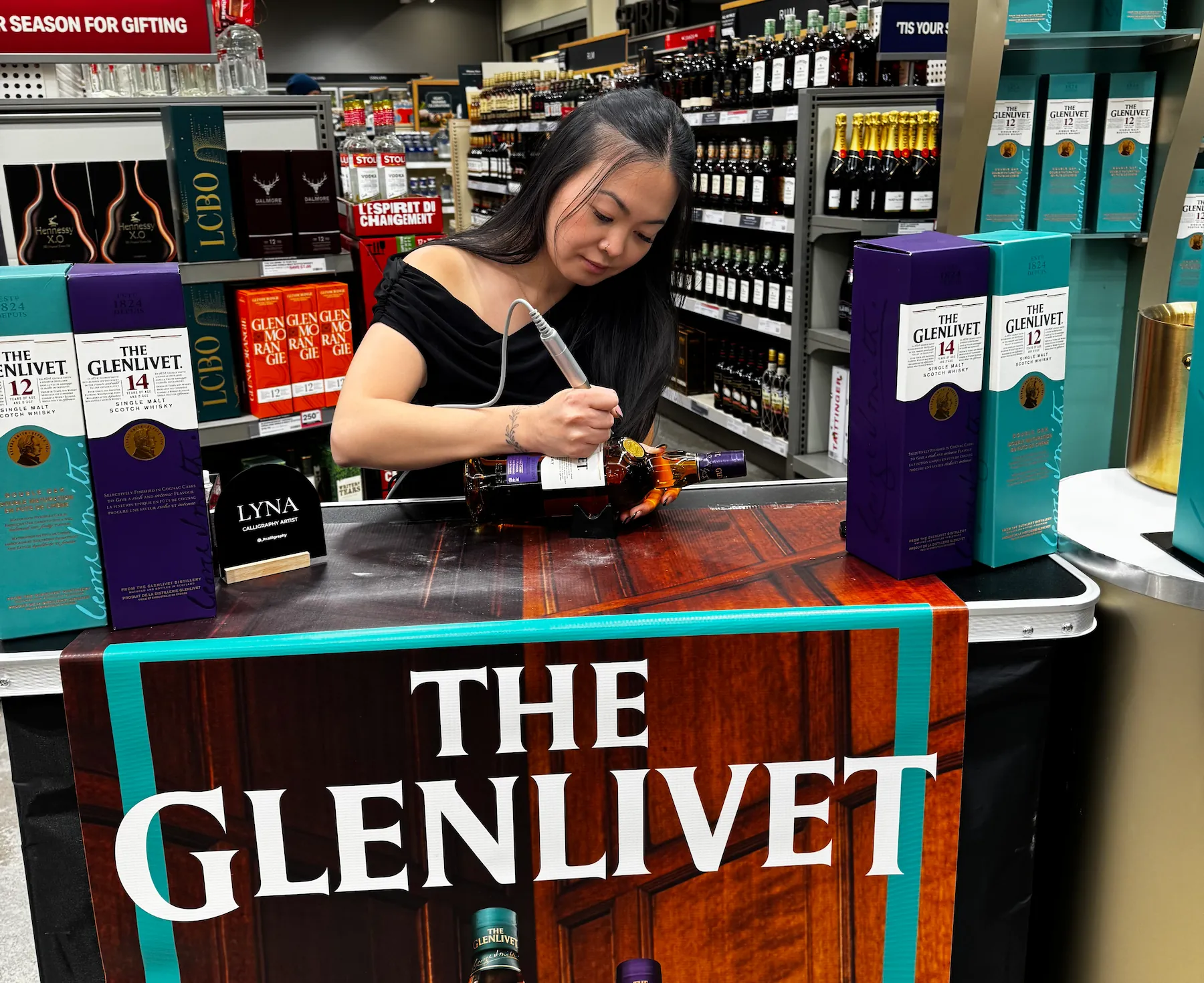
The keepsake matters, but the interaction is what guests remember. They see the lettering happen in real time, ask questions, choose their wording, and receive something that feels made for them.
That live element can support several event goals at once:
- encouraging guests to spend more time in the space
- creating a natural conversation point
- giving attendees something useful or sentimental to take home
- reinforcing the host brand through a premium detail
Choose the right technique for the product
Calligraphy, engraving, and foiling all create different effects. The right method depends on the material, the event environment, and how permanent the finished piece needs to be.
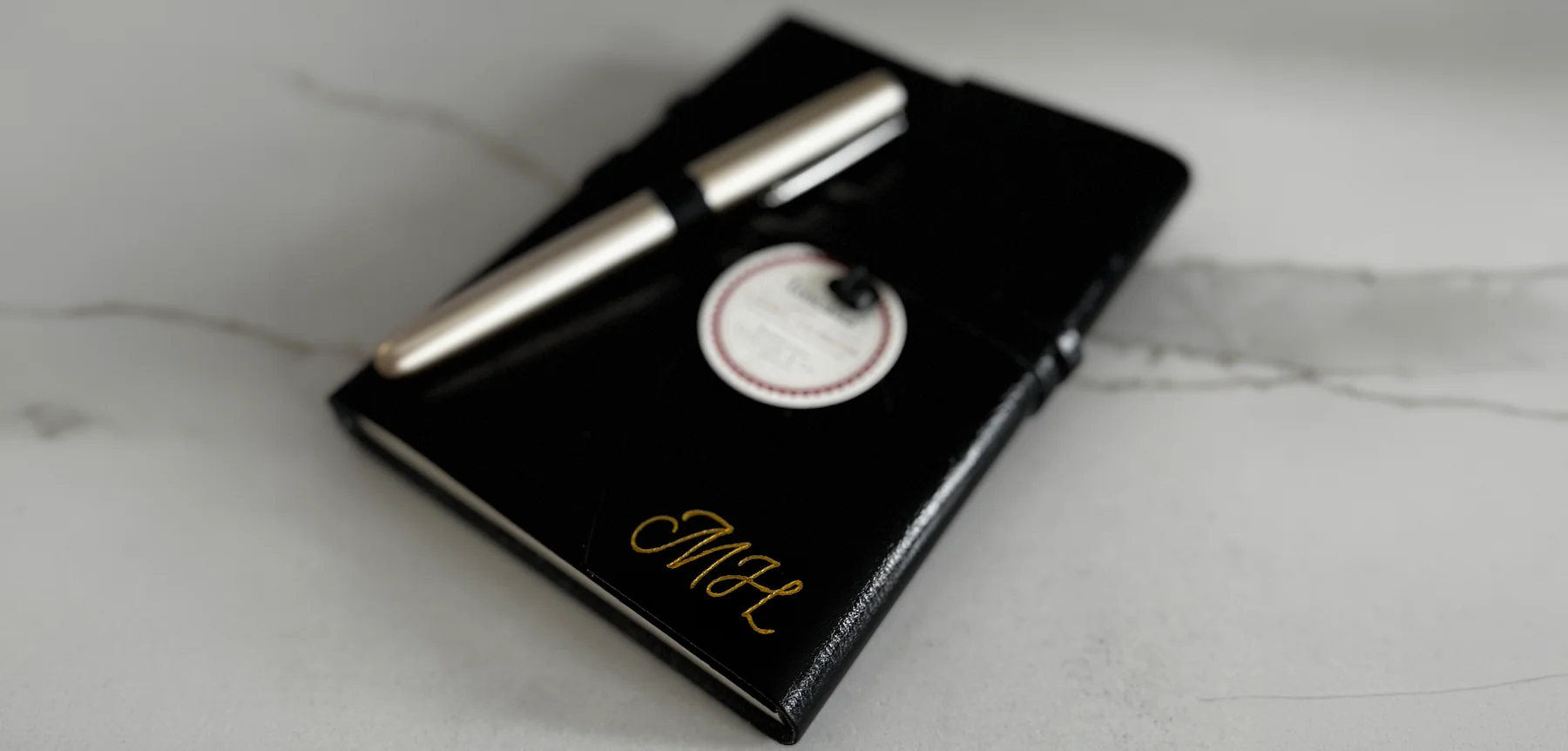
Calligraphy is ideal for paper goods, packaging, tags, cards, and selected product surfaces. Engraving is stronger when the goal is permanent personalization on glass or metal. Foiling is useful for leather, paper, ribbon, select fabrics, and compatible flat items.
Build in enough space and light
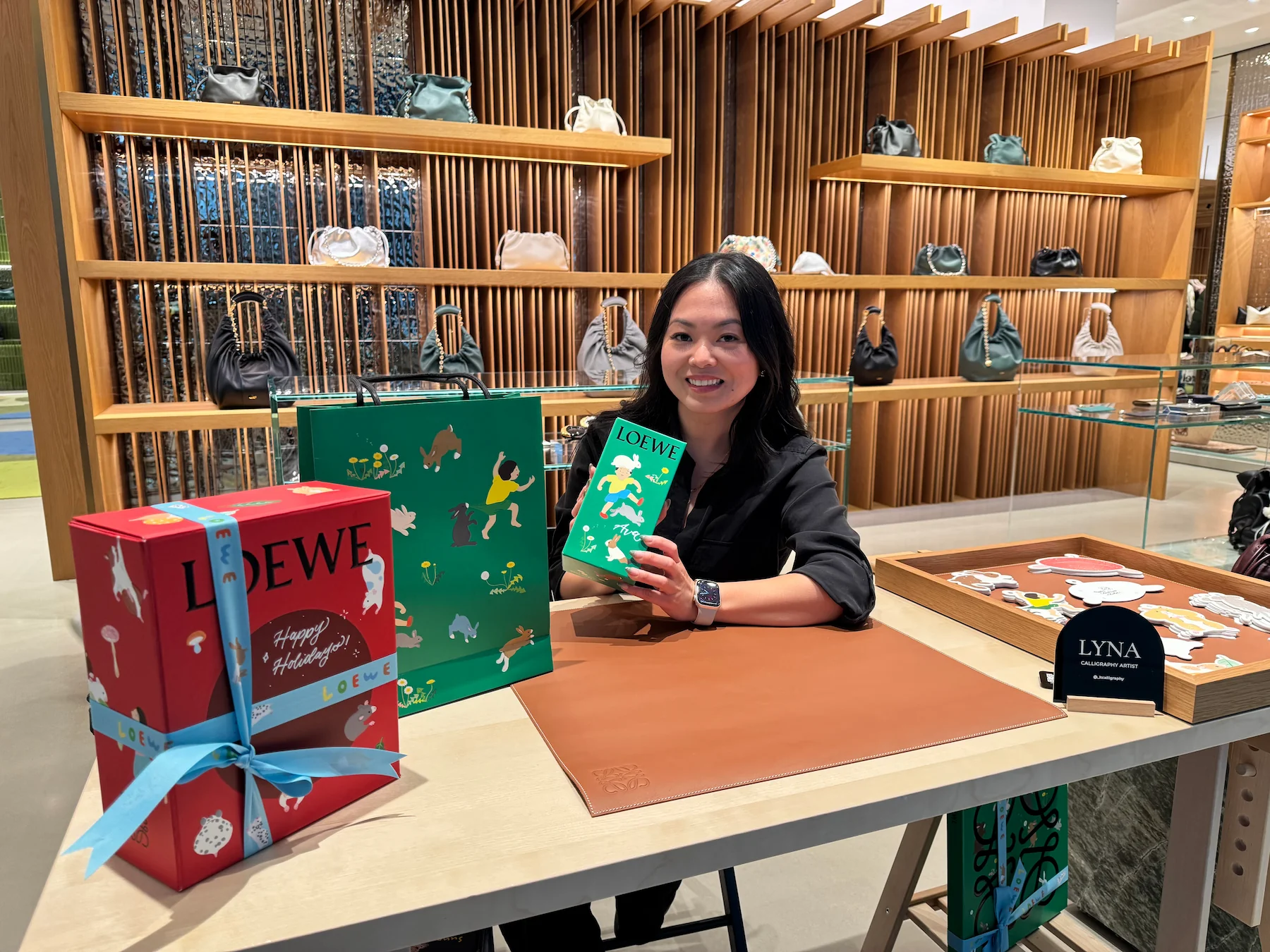
A personalization station does not need to be large, but it does need to be functional. A stable table, good lighting, and a clear surface help the artist work cleanly and allow guests to see the process.
For planners, this is a simple detail that has a large impact on how refined the station feels.
When the station is planned well, personalization becomes part of the event design rather than a side activity.
Decide whether the work should be live or in-studio
Some projects are better completed before the event. Large quantities, detailed phrases, custom artwork, shipping, and packaging coordination may be better suited to in-studio production.
A hybrid approach can also work well: some pieces are prepared in advance, while guests receive a live finishing detail at the event.